Showing posts with label floating ball valve manufacturers in India. Show all posts

Wednesday, 4 December 2024

Floating Ball Valves in Industrial Fluid Control

In industries where fluid control is critical to operational safety and efficiency, floating ball valves are commonly used for their simplicity and effective sealing properties. These valves are particularly useful for regulating the flow of liquids or gases and are a vital part of various industrial applications, ranging from oil and gas to water treatment. Their unique design allows for seamless integration into fluid systems that demand reliable on/off control with minimal leakage.

What Sets Floating Ball Valves Apart?

These Ball valve is a type of ball valve where the ball is not fixed at both ends. Unlike trunnion ball valves, which have the ball secured at two points, the ball in a floating valve "floats" freely within the valve cavity. This means the ball is only held in place by the pressure exerted by the fluid in the pipeline. The advantage of this design is that it allows for a reliable seal under moderate pressure conditions.

They are typically used in applications where the flow of fluid needs to be turned on or off quickly and efficiently. When the valve is closed, the ball rotates 90 degrees to block the fluid flow, creating a leak-tight seal. This makes them ideal for both high-flow and low-pressure systems.

How Floating Ball Valves Operate

The operation of these ball valves is straightforward. The ball valve consists of a spherical ball housed inside a valve body. When the valve handle is rotated, the ball turns, aligning or misaligning the flow path. In the open position, the flow path is clear, allowing the fluid to pass through. As the valve is closed, the ball rotates 90 degrees and presses against the valve seats, preventing any further fluid flow. The ball’s "floating" nature ensures that it adjusts based on the fluid pressure, providing a reliable and efficient sealing mechanism.

One of the key advantages of this design is the low cost of construction. Since the ball is only supported by the pressure of the fluid, there is less complexity involved compared to other types of ball valves.
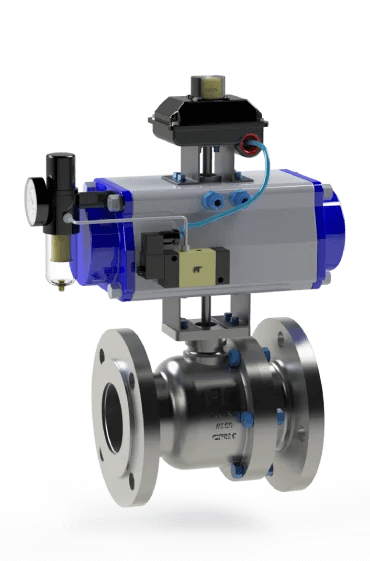
Pneumatically Actuated Floating Ball Valve

Applications 

They are widely used across several industries, where fluid control is essential. Some of the most common applications include:

  1. Oil and Gas Industry: These valves play a critical role in regulating the flow of oil, natural gas, and other fluids. They are essential in both upstream and downstream operations where tight seals and the ability to handle high pressures are needed.

  2. Water Treatment Systems: In water treatment plants, they are used to regulate the flow of water throughout various stages of the treatment process, including filtration, chemical dosing, and distribution. Their durability and reliability make them a preferred choice for such applications.

  3. Chemical Processing: For the chemical industry, which often deals with hazardous substances, these valves help manage the flow of corrosive chemicals, ensuring safety and preventing leaks.

  4. Food and Beverage Manufacturing: In food and beverage industries, where hygiene standards are paramount, these valves are designed with easy-to-clean surfaces, ensuring contamination-free operations.

  5. HVAC Systems: In HVAC (heating, ventilation, and air conditioning) systems, they are used to control the flow of water or air for cooling and heating. Their smooth operation and adaptability to various pressures make them suitable for these applications.

Benefits 

  1. Reliable Sealing: They are designed to provide effective sealing even under fluctuating fluid pressure, ensuring a leak-free experience in fluid systems.

  2. Cost-Effectiveness: Their simple design and fewer components make these valves an affordable choice for fluid control, especially in low- to medium-pressure applications.

  3. Reduced Maintenance: Due to their fewer moving parts, these valves require less maintenance than more complex valve systems, ensuring long-term performance with minimal servicing.

  4. Material Variety: These valves are available in different materials such as stainless steel, which makes them adaptable to various types of fluids, including corrosive or high-temperature fluids.

  5. Compact Design: The smaller and lighter design of these valves makes them easier to install and integrate into existing systems, particularly in spaces where room is limited.

Choosing the Right Floating Ball Valve

Consider factors such as:

  1. Pressure and Temperature Ratings: Ensure the valve is suitable for the pressure and temperature conditions of your specific application.

  2. Fluid Compatibility: The valve material should be compatible with the fluids in your system. For corrosive substances, stainless steel valves are a common choice.

  3. Size and Flow Requirements: Choose a valve that matches the required flow rate and size specifications for your system.

  4. Operational Ease: Depending on your needs, consider whether manual or automated control is more appropriate for your application.

Conclusion

They offer effective and reliable fluid control across various industries. Their simple yet efficient design provides a secure flow regulation mechanism, making them ideal for applications in the oil and gas, water treatment, chemical processing, and food manufacturing sectors. By selecting the right Floating Ball Valve based on the specific needs of your system, you can ensure optimal performance and safety.

Monday, 16 September 2024

Float Ball Valves and Their Applications

 A Float Ball Valve is a type of valve that controls the flow of liquids or gases by using a floating ball mechanism. These valves are commonly used in industries where precision flow control is critical, such as oil and gas, water treatment, chemical processing, and more. The floating ball design offers multiple advantages, including ease of operation, reliability, and durability, making it a popular choice among industries requiring efficient fluid management.

In this article, we'll explore the function of float ball valves, their benefits, and the types available in the market, focusing on floating ball valve suppliers and floating ball valve manufacturers in India.

Floating Ball Valve Manufacturers in India

What is a Float Ball Valve?

A float ball valve features a spherical ball that sits in a valve body, which rotates on a horizontal axis to open or close the flow of a liquid or gas. The floating design means that the ball is not fixed in place; instead, it is held between two sealing surfaces. When the valve is in the closed position, the pressure from the fluid pushes the ball into the downstream seat, creating a tight seal to prevent leakage. This floating design allows the valve to offer low-pressure drops, fast shutoff, and ease of operation.

These valves are widely preferred for their ability to handle high temperatures and pressures, offering minimal resistance to flow and a reliable sealing mechanism. They are commonly used in pipelines to control the flow of fluids.

Types of Float Ball Valves

There are various types of float ball valves, each designed for specific applications. Some of the popular types include:

  1. Stainless Steel Floating Ball Valves: Stainless steel float ball valves are highly durable and resistant to corrosion, making them ideal for harsh environments and applications involving aggressive chemicals. The stainless steel material enhances the valve's lifespan and ensures reliability even under extreme conditions. These valves are widely used in industries such as petrochemicals, food processing, and pharmaceuticals.

  2. 1-Inch Floating Ball Valve: The 1-inch floating ball valve is a common size for various applications, offering an ideal balance between compactness and performance. These valves are typically used in smaller pipelines where precise flow control is required. They provide excellent shutoff capabilities, making them suitable for both high-pressure and low-pressure systems.

  3. High-Pressure Floating Ball Valves: These valves are designed to withstand high-pressure applications, making them ideal for industries such as oil and gas. Their robust construction ensures they can operate reliably even under extreme pressure conditions.

Advantages of Floating Ball Valves

  • Versatility: Float ball valves can be used with a wide range of liquids and gases, including water, steam, oil, and chemicals.

  • Leak-Proof Design: The floating ball mechanism ensures a tight seal when the valve is closed, preventing leaks even in high-pressure systems.

  • Durability: With options like stainless steel floating ball valves, these valves offer superior corrosion resistance and long-lasting performance, especially in demanding industrial environments.

  • Ease of Use: The simple design of float ball valves makes them easy to operate, requiring minimal effort to open and close, and they can be easily automated.

  • Low Maintenance: These valves require minimal maintenance, thanks to their sturdy construction and efficient design.

Key Applications of Float Ball Valves

Float ball valves are widely used across various industries for different applications, including:

  • Oil and Gas Industry: Float ball valves are extensively used to control the flow of crude oil, natural gas, and other petrochemical products.

  • Water Treatment: In water treatment plants, these valves help control the flow of water and chemicals during purification processes.

  • Pharmaceuticals: In the pharmaceutical industry, stainless steel floating ball valves are commonly used to handle aggressive chemicals and maintain the purity of fluids.

  • Food and Beverage: These valves play a crucial role in managing the flow of fluids during food and beverage production processes, ensuring hygiene and safety standards.

Finding Reliable Floating Ball Valve Suppliers

When looking for Pneumatically Actuated Floating Ball Valve suppliers, it is crucial to choose a manufacturer that prioritizes quality, precision, and durability. In India, there are several reputable floating ball valve suppliers, including companies specializing in stainless steel floating ball valves and providing custom solutions based on specific industrial needs.

For businesses operating in India, floating ball valve suppliers in India offer a range of options to meet diverse application requirements. These suppliers often provide local support, ensuring quick delivery, easy access to parts, and cost-effective solutions.

Choosing the Right Floating Ball Valve Manufacturer

When selecting a floating ball valve manufacturer, several factors should be considered:

  • Material Quality: Look for manufacturers that use high-quality materials like stainless steel to ensure long-lasting performance and resistance to wear and corrosion.

  • Certification: Ensure the manufacturer complies with international standards, such as ISO and API certifications, to guarantee that the valves meet industry specifications.

  • Customization: Some industries may require custom-designed valves to meet specific needs, so choosing a manufacturer that offers tailored solutions is important.

  • After-Sales Support: Reliable after-sales support, including installation guidance and maintenance services, is a key aspect of choosing the right manufacturer.

Conclusion

Floating ball valves are essential components in various industrial applications due to their efficiency, reliability, and ease of use. When looking for floating ball valve suppliers or floating ball valve manufacturers, it’s important to prioritize quality, material selection, and certification.

For those looking to invest in high-quality float ball valves, consider purchasing from Freture Techno Pvt. Ltd., a leading manufacturer offering durable, reliable, and precision-engineered solutions for all your fluid control needs.

Precision Flow Control: The Ultimate Guide to Industrial Ball Valves

Ball valves are the most widely used quarter-turn components in modern fluid mechanics. They utilize a rotating spherical disc with a bored-...